

One of the first things people ask me when they start planning is: do you need an officiant to get married in Norway, and the honest answer depends entirely on one thing: are you doing this legally, or symbolically? It sounds simple, but it’s worth knowing exactly how it works before you start booking anything.
Table of Contents
- If You’re Having A Symbolic Ceremony
- Who Can Legally Officiate A Wedding In Norway
- Will An Officiant Travel To Your Location?
- What Your Officiant Needs From You
- How To Find A Wedding Officiant In Western Norway
- Q&A
- Get In Touch
If You’re Having A Symbolic Ceremony
Anyone can lead a symbolic ceremony: a friend, a parent, a sibling, or nobody except the two of you exchanging vows alone. No authorisation, no approval, no paperwork. That’s the whole answer!
If you’re still deciding between symbolic and legal, I cover that in detail in my guide here.
Everything below is for anyone who wants their Norway ceremony to be legally binding.
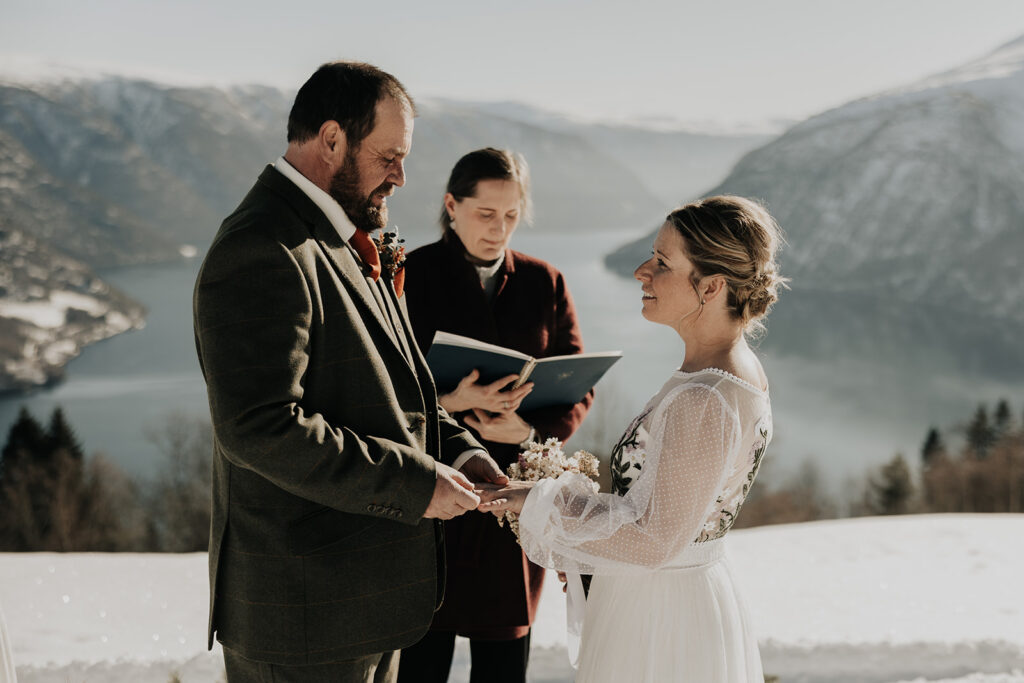
Who Can Legally Officiate A Wedding In Norway?
This is where many guides are vague, so let’s get specific. When it comes to who can legally marry you in Norway, there are 3 routes:
1. Civil Officiant Through the Kommune
A civil ceremony in a Norway municipality is the most commonly mentioned option and the least explained one.
Here’s how it actually works:
Each Norwegian municipality (kommune) has authorised officiants who conduct civil weddings. In smaller municipalities, this is often the mayor. In larger ones, a designated civil registrar handles it. Every kommune sets its own wedding days and available times, so the process is not the same across the country.
In Western Norway, the local kommuner are approachable and the process is manageable, but you do need to contact them directly and early. When you reach out, ask specifically whether they conduct outdoor ceremonies, what dates they have available during your travel window, and whether there are fees involved beyond the standard process.
2. The Norwegian Humanist Association
A Norwegian Humanist Association wedding ceremony, conducted through Human-Etisk Forbund, is the option most people have never heard of and the one I point a lot of couples toward.
Their officiants are fully authorised to perform legal marriages in Norway, the ceremonies are non-religious, and they take time beforehand to shape everything around your actual story.
If you want something that feels personal, this route is worth serious consideration. They have English language support on their website and are experienced with international visitors.
3. Church of Norway and Registered Faith Communities
For a religious ceremony, the Church of Norway and other registered faith communities are legally authorised to perform marriages. At least one partner is generally expected to be a church member for a Church of Norway ceremony. For most couples eloping from the US, this is not the route, but it’s worth knowing it exists.
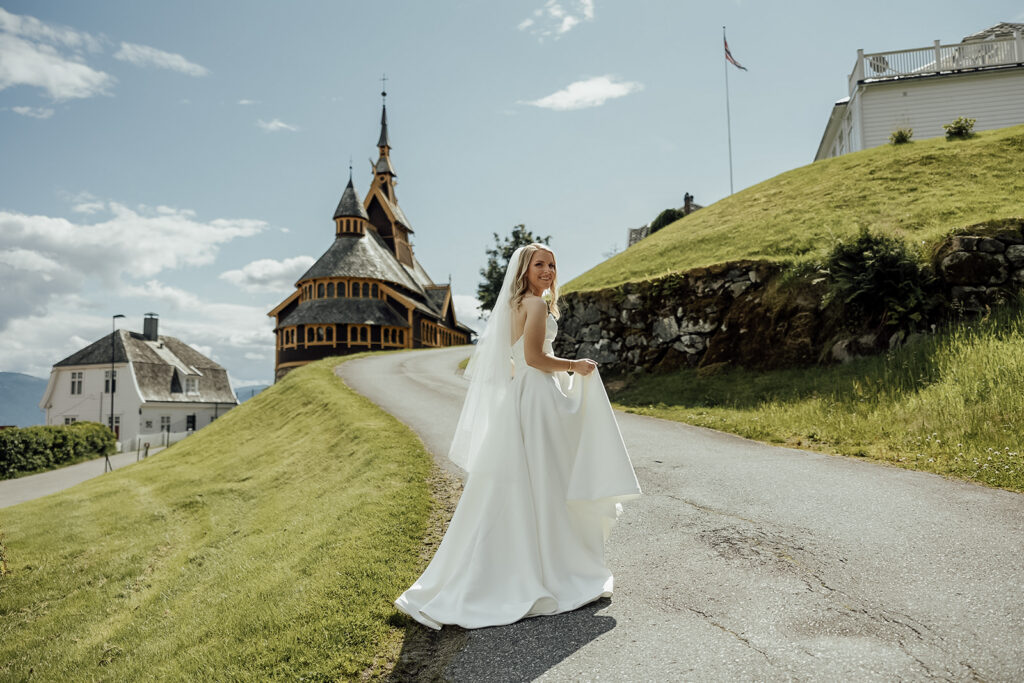
Will An Officiant Travel To Your Location?
This is the question nobody answers directly, and it’s the one that matters most if you’re picturing an outdoor ceremony on a fjord or up in the mountains.
Here’s the breakdown:
- A civil officiant through the kommune: It depends on the municipality. Some will travel to outdoor locations, others require the ceremony at the town hall. Ask this directly when you first make contact.
- A humanist officiant: Generally more flexible on location and more accustomed to working with elopement-style ceremonies. An outdoor mountain or fjord setting is worth bringing up early in the conversation.
- Church of Norway: Typically tied to a church building.
As an elopement photographer in Norway working in Western Norway, my experience has been that humanist officiants are the most accommodating when it comes to reaching more remote or scenic locations. If getting married outdoors in a specific location matters to you, the humanist route is the best place to start.
What Your Officiant Needs From You
Before your ceremony can happen legally, make sure the following are in place:
- Prøvingsattest: your marriage licence from Skatteetaten, sent to your officiant before the ceremony. It’s valid for 4 months from the date of issue.
- Two adult witnesses present at the ceremony. If you’re eloping without guests, ask your kommune or officiant in advance whether they can arrange this.
- Valid ID (your passport) on the day.
- After the ceremony, your officiant sends the marriage notification to Skatteetaten within three days, and your marriage certificate follows by post.
How To Find A Wedding Officiant In Western Norway
Most guides on this topic say to “contact an officiant” and leave it there. If you’re American and wondering where to even start, here’s what I tell couples:
- For a civil officiant: Go directly to the municipality website for the area where you plan to marry. Each kommune lists their wedding days, contact details, and any fees.
- For a humanist officiant: Contact Human-Etisk Forbund through their website. They have an English enquiry process and can connect you with an officiant in your region.
- For either route: Reach out at least 6 months before your wedding date. Summer availability in Western Norway books up fast.
Can anyone officiate a wedding in Norway outside of these authorised routes? No. If you want a legally binding ceremony, your officiant must be formally approved.
This is where knowing someone local makes a real difference. I know the officiant contacts in Western Norway who work well with elopements, and pointing you toward the right people is part of what I do. Just get in touch.

Q&A
Q: Do I need an officiant if we’re just having a symbolic ceremony in Norway?
A: No. A symbolic ceremony has no legal requirements, which means anyone can lead it or you can exchange vows entirely on your own. No paperwork, no authorisation, and no approval needed.
Q: Can my friend or family member officiate our wedding in Norway?
A: For a legal ceremony, no. Your officiant must hold formal authorisation from Norwegian authorities, and that cannot be granted to a friend or family member. For a symbolic ceremony however, absolutely. Anyone you want can lead it!
Q: Do wedding officiants in Norway travel to outdoor locations?
A: It depends on the type. Humanist officiants in Norway are generally the most flexible. Civil officiants vary by kommune, so ask directly when you make contact. Church officiants are typically tied to a building.
Q: What’s the difference between a civil and humanist officiant in Norway?
A: A civil officiant works through the local municipality and conducts a standard legal ceremony. A humanist officiant works through Human-Etisk Forbund, is also fully legally authorised, and takes a more personal approach by shaping the ceremony around you.
Both are legally valid. The humanist route works better for most elopement couples who want flexibility on location and something that feels like theirs.
Q: How far in advance should we book a wedding officiant in Norway?
A: Six months is a safe target, especially for summer. Some kommuner have very limited wedding days, and humanist officiants book up during peak season. The earlier you reach out, the more options you have.
Q: What documents does our officiant need before the ceremony?
A: The main one is your prøvingsattest, the marriage licence issued by Skatteetaten. It needs to reach your officiant before the ceremony and is valid for four months from issue. Bring your passport on the day as well.
Still Figuring Out The Details?
Download my free Norway Elopement Experience guide below to see how your whole day could come together.
And if you want a local steer on which officiant route makes sense for your plans, just reach out. I’ve helped plenty of people work through exactly this.


Add a comment
0 Comments